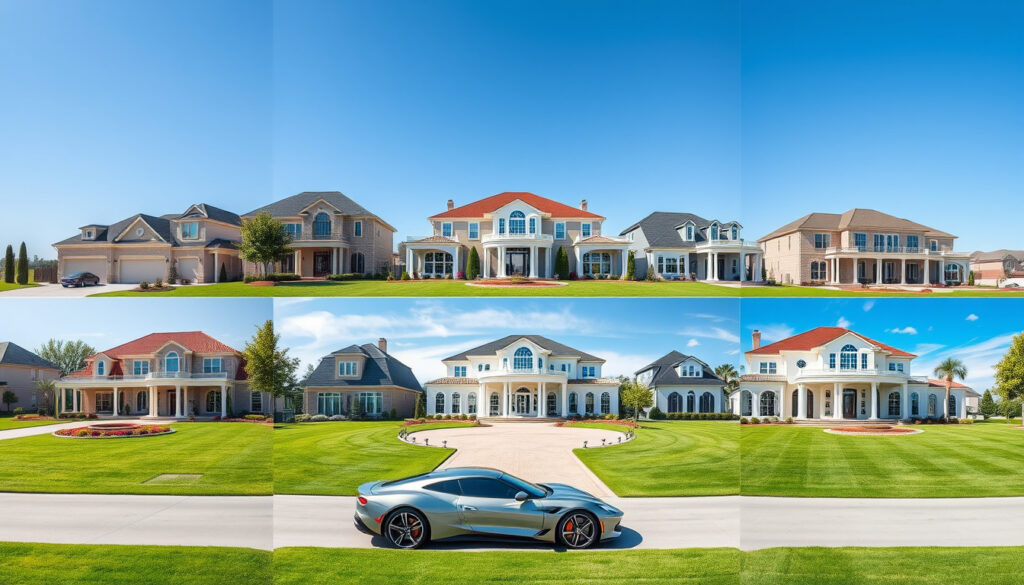
In recent decades, McMansions have reshaped the American housing market. They began as symbols of the 1980s suburban boom and now stand as subjects of both interest and criticism. McMansions are large and built with mixed styles. This article breaks down their appeal, trace, cultural role, and ongoing part in a shifting market.
What is a McMansion?
A McMansion is a large home—usually over 3,000 square feet—that sits in a suburb. These homes mix styles like Tudor and farmhouse. Their traits can seem generic or even garish, which has sparked mixed views. Yet, these houses keep a strong hold on American real estate. They show a form of spacious living that many middle-class families see as their American Dream.
The Origins of the McMansion
McMansions first appeared during the 1980s housing boom. Families wanted more space to live. Mortgage deregulation let lenders offer riskier loans, such as adjustable-rate mortgages. This change made home ownership easier for many, so families could buy larger houses. As wages climbed and the economy shifted, large homes became a sign of status. By the mid-2000s, McMansions made up almost 15% of suburban homes. They were seen as good investments because they were spacious and relatively affordable.
The Economic Roller Coaster
The 2008 economic crash hit the housing market hard. Home values fell and doubts grew about McMansions as investments. Many faced foreclosures and dropping values. High costs for utilities and maintenance soon made the grand size less appealing. Homeowners either downsized or focused on repairs. Later, as the economy steadied, McMansions found new life. Buyers looked for homes with perks like gyms, theaters, and special rooms. Even with high mortgage rates and tight markets for affordable homes, McMansions captured up to a quarter of sales just before the pandemic.
The Current Landscape of McMansions
Today, McMansions face fresh challenges. The booming market, coupled with few affordable options, drives first-time buyers toward these larger houses. At the same time, building new homes costs too much because material prices and economic swings have risen. For buyers who cannot afford new builds, McMansions stay a tempting choice. Their value now shifts with location and build quality. Homes near cities tend to keep and grow in value better than those far away. Yet, buyers must watch for hidden renovation costs in older homes.
The Future of McMansions
Many factors will shape the future of McMansions. Economic changes, such as tariffs that boost construction costs, and changing buyer tastes may alter the market. Quality construction and proper upkeep will decide future success. Even if McMansions earn a reputation for being flashy or shoddily built, they maintain a key spot in American suburbs. They blend consumer dreams, economic shifts, and cultural trends. For many families, the promise of extra space and modern features continues to fuel the idea of the American Dream.
In conclusion, our interest in McMansions shows the tight bond between American values and homeownership. As long as these homes promise a larger life, they will stay a part of real estate talks for years to come.