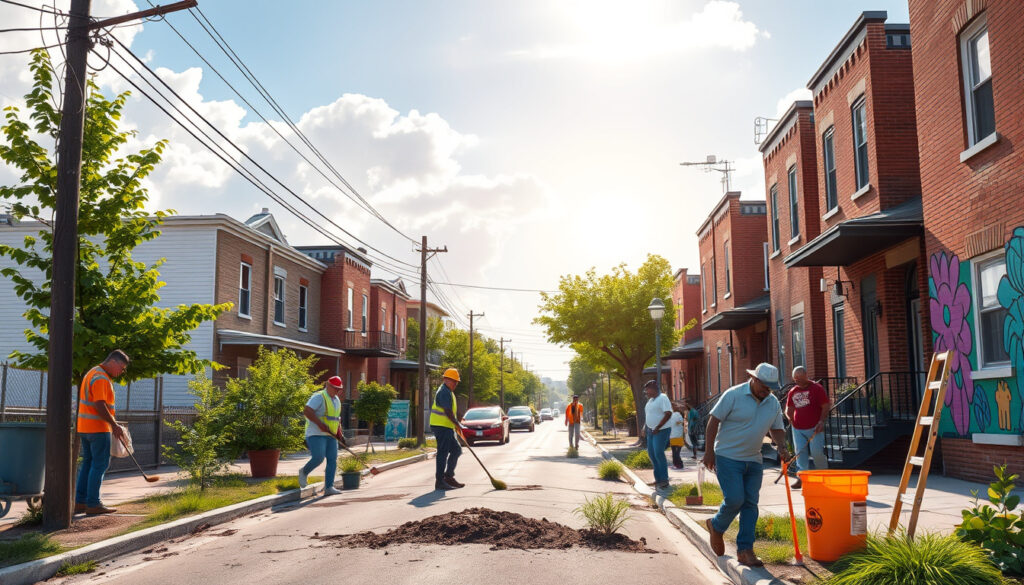
In many cities worldwide, litter and empty spaces hurt community pride. They lower the quality of life. The push to change these “trashy towns” is growing. This article shows key plans and real-life stories. It tells how neighbors join to renew their streets.
Understanding the Challenge
Urban decay shows up as trash on streets, empty buildings, and wild lots. These signs risk residents’ health and safety. Economic decline, low community ties, and poor city services make decay worse. When disorder grows, people feel cut off. They lose connection with one another and care less.
Uniting Communities
Change depends on neighbors, local agencies, and non-profits. Grassroots groups take charge of local cleaning. They use smart and lasting fixes to bring back life. When people join, they claim their space. They feel proud of their neighborhood.
Strategic Cleanup Initiatives
Cleanup starts with well-planned events. Neighbors gather to remove trash and clear wild areas. Local governments join these efforts. The events clean streets and spark new bonds. People share common hopes and tasks.
Green Spaces and Community Gardens
Green spaces and gardens boost renewal. They serve as meeting points and support nature. Gardens beautify the area and give a place to grow food. This change helps people eat healthier and feel secure.
Art and Culture
Public art changes how towns look and feel. Local artists create murals and projects on walls. These artworks brighten dull corners and tell local stories. In this way, art builds pride and community spirit.
Education and Awareness
Teaching about clean spaces makes a difference. Programs for children and adults spread care for nature. Workshops on waste, recycling, and the environment add to these lessons. They also support habits that last a lifetime.
Case Studies of Success
Some towns have turned decay into success. One town faced heavy litter. It organized a cleanup day that many joined. Decorative bins were set up. They made streets neat and lively.
In another town, workshops taught native plants and gardening. Empty lots became green and vibrant. The projects drew in local shops. Together, these changes refreshed the neighborhood.
Conclusion
Turning trashy towns into vibrant communities is a shared task. Residents, local groups, and city teams work side by side. With cleanup events, green spots, art, and education, change is within reach. When communities unite, forgotten corners bloom with new life and pride.