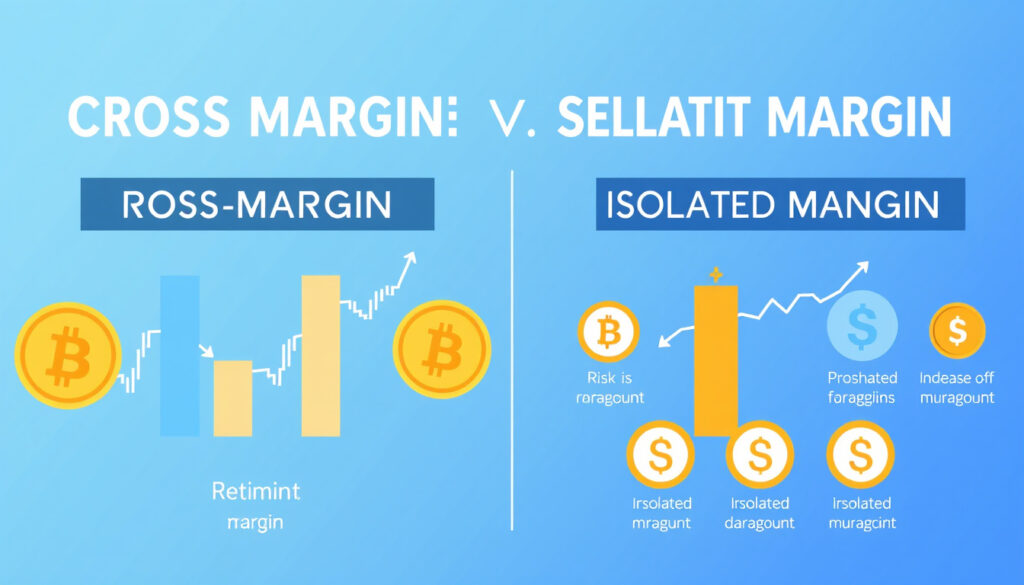
In the ever-evolving world of cryptocurrency trading, one of the most critical decisions that traders must make involves choosing the right margin setting. Specifically, the choice between cross margin and isolated margin can significantly impact a trader’s experience and overall success. While both settings offer unique advantages, understanding how they work is essential for any crypto enthusiast looking to optimize their trading strategy.
What Are Margin Settings?
Margin trading allows traders to borrow funds to increase their overall position size, thereby amplifying potential profits. However, it also introduces higher risks, which is why the choice of margin setting becomes crucial. The two primary margin settings you’ll encounter are cross margin and isolated margin.
Cross Margin: A Safety Net or a Double-Edged Sword?
Cross margin utilizes the total balance of a trader’s account to cover potential losses across all active positions. This means that if one trade incurs a loss, the funds from other open positions can be used to maintain margin requirements.
Pros of Cross Margin:
- Risk Distribution: Since all funds are pooled together, cross margin can protect against liquidation as it provides an overall buffer.
- Flexibility: It allows traders to manage multiple positions efficiently without the need to constantly adjust margins for each trade.
Cons of Cross Margin:
- Higher Risk of Liquidation: While the safety net can cushion losses, the downside is that a poor performance in one position can lead to liquidation of the entire account.
- Emotional Decision-Making: Traders might be tempted to hold onto losing positions longer, hoping for a turnaround, which can lead to more significant losses.
Isolated Margin: Control at Your Fingertips
In contrast, isolated margin provides more control by limiting the margin available for a specific position. Traders can allocate a set amount of their total capital to a particular trade, separating each trade’s risk from the rest of the portfolio.
Pros of Isolated Margin:
- Defined Risk: Each position operates independently, which means that the losses incurred on one trade will not affect others.
- Focus on Performance: Traders can cut their losses more easily without the fear of impacting their entire account.
Cons of Isolated Margin:
- Risk of Liquidation: If the allocated margin for a position is insufficient to cover losses, that position can still be liquidated – but it will not affect other trades.
- Less Buffer: Isolated margin provides less flexibility, as traders must ensure that each position is adequately funded to prevent liquidation.
Choosing the Right Margin Setting
The decision between cross and isolated margin should be based on individual trading strategies, risk appetite, and market conditions. Here are some factors to consider:
- Experience Level: Novice traders may benefit from the security of cross margin until they gain more experience managing trades and understanding market movements.
- Trading Style: Day traders who often open and close positions may prefer isolated margin for better control over risks, whereas swing traders might find cross margin suitable for longer-term investments.
- Market Volatility: During highly volatile periods, isolated margin can help prevent an entire account from being liquidated, given the unpredictability of the market.
Final Thoughts
Being aware of the implications of cross and isolated margin is essential for navigating the complex landscape of cryptocurrency trading. Each setting offers distinct advantages and dangers, and the right choice often hinges on the trader’s unique goals and risk tolerance. Ultimately, educating oneself on these margin concepts is a critical step in harnessing the full potential of crypto trading while mitigating risks, and ultimately, laying the groundwork for a successful trading journey.
As the crypto landscape continues to evolve, equipping oneself with the knowledge and tools necessary to make informed decisions becomes more vital than ever. Whether you are just starting or looking to refine your trading strategy, understanding cross vs. isolated margin is a key facet of your trading journey.