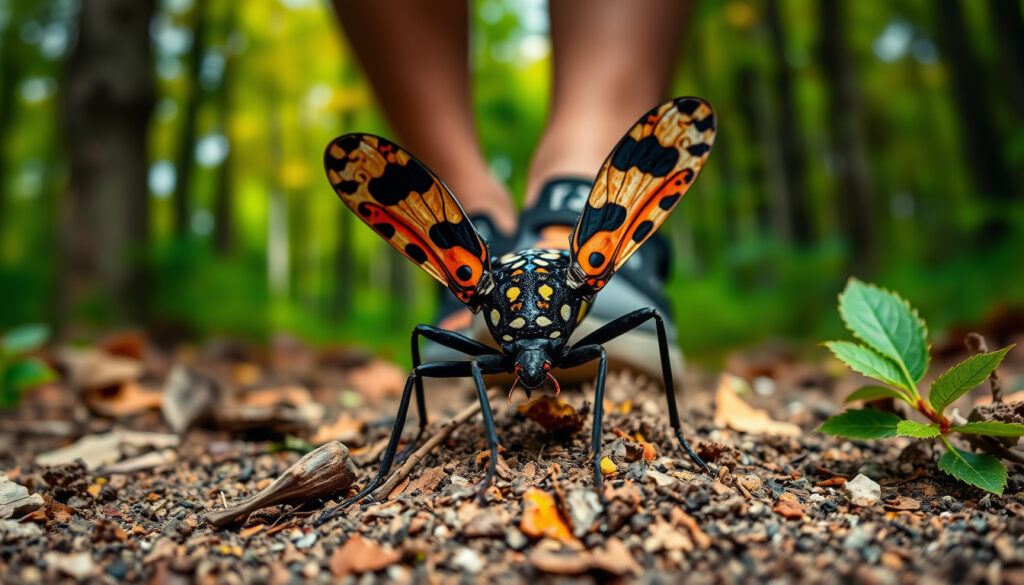
In recent years, a peculiar insect steals the spotlight in talks about invasive species: the spotted lanternfly. It shows bright yellow stripes and red hindwings. At first, it may seem charming. But behind that look hides a strong threat to our nature and farms.
Understanding the Spotted Lanternfly
The lanternfly comes from China, Japan, and Vietnam. It first appeared in the United States in 2012. It likely hitched a ride in a shipment of cut stone. It quickly adapts to new environments and now lives in 14 states. This fast move causes worry for local nature and food supplies.
The insect mainly feeds on the Tree of Heaven. This tree is an invasive species too. It pushes out native plants. One might think that an insect that eats this tree helps the problem. But their link is more harmful than good. The Tree of Heaven lets the lanternfly grow and spread, so it brings more harm to nature.
How They Affect Our Environment
Spotted lanternflies feed on plant sap. They act like tiny bloodsuckers on trees. They pierce plants to get to the sap. This makes plants weak and prone to disease. Their feeding leaves behind honeydew, a sticky sugary drop. Honeydew makes mold grow. This mold harms crops like corn, soybeans, and grapes.
In Pennsylvania and other states, the lanternflies may cost farmers and loggers about $500 million each year. Their spread hurts both the environment and our food.
The Importance of Action
There are actions we can take. Winter is a key time. In winter, adult lanternflies die and leave eggs behind. Removing these eggs by hand is one smart step. Egg clusters look like brown dirt on the Tree of Heaven.
Communities can help. People watch for the eggs and report them to farm experts. Some now use trained scent hounds to find eggs. Agencies also use pesticides and sticky traps. They use these tools with care so that good insects are not harmed.
Your Role in the Fight
Every citizen can make a difference. If you see a spotted lanternfly or its eggs, call local agricultural officials. Acting now can stop a bigger problem tomorrow.
Conclusion
The spotted lanternfly may seem pretty, yet it warns us about invasive species. Its quick spread and economic harm show why we must act. Knowing its life cycle, knowing where to look, and knowing how to report are key steps. When you help fight the lanternfly, you protect our nature and food. Let us work together to crush this invasive threat!