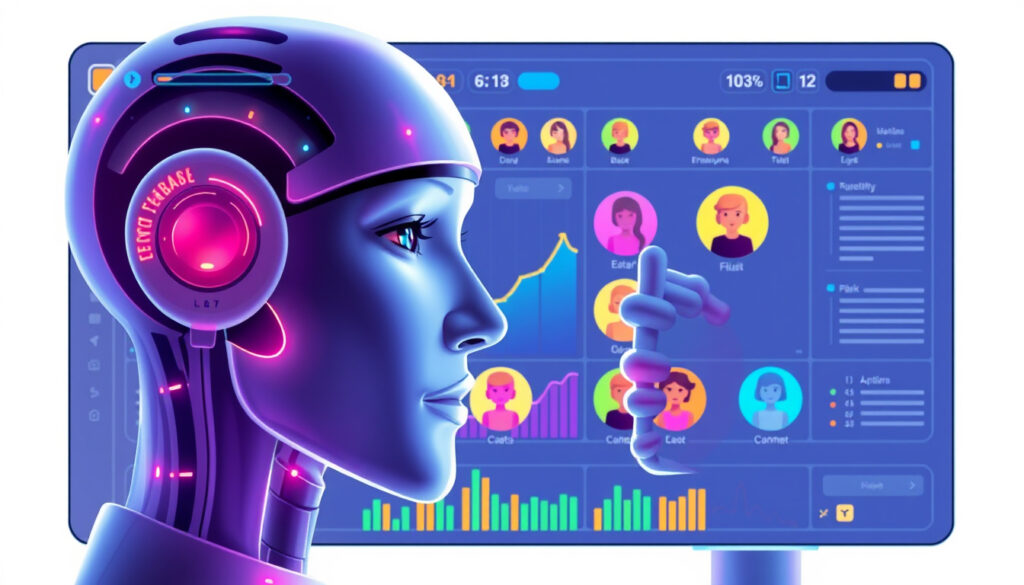
AI Sentiment Analysis: Transforming How Businesses Understand Customer Emotions
In today’s hyper-competitive marketplace, understanding customer emotions has become essential for businesses looking to stay ahead. That’s where AI sentiment analysis comes into play, revolutionizing how companies interpret the feelings behind customer interactions. By leveraging advanced artificial intelligence techniques, businesses can gauge customer satisfaction, identify emerging issues, and tailor their marketing strategies more effectively than ever before. This article explores how AI sentiment analysis is transforming the way businesses understand customer emotions and improve overall customer experience.
What Is AI Sentiment Analysis?
AI sentiment analysis involves using artificial intelligence algorithms to evaluate text, speech, or social media data to determine the emotional tone behind a customer’s message. Whether it’s reviews, social media posts, chat conversations, or survey responses, AI sentiment tools analyze language patterns to classify emotions as positive, negative, or neutral—and sometimes more nuanced feelings like frustration, excitement, or confusion.
The core benefit of AI sentiment is its ability to process vast amounts of data quickly and accurately, providing real-time insights into customer attitudes. Businesses can then act swiftly on these insights, adjusting their strategies to enhance satisfaction or address concerns before they escalate.
How AI Sentiment Analysis Is Changing Business Dynamics
Enhanced Customer Understanding
AI sentiment enables companies to truly understand how customers feel about their products, services, or brand overall. Instead of relying solely on surveys or feedback forms, businesses can monitor ongoing conversations and reviews across multiple channels, gaining a comprehensive picture of customer sentiment.
Real-Time Feedback and Improvement
Traditional feedback mechanisms often involve delays, but AI sentiment analysis offers real-time insights. This immediate feedback loop empowers businesses to respond promptly—resolving complaints, clarifying misunderstandings, or amplifying positive experiences.
Personalized Customer Engagement
Understanding customer emotions allows for more personalized interactions. For example, if a customer expresses frustration in a social media comment, an AI-powered system can trigger tailored responses or escalate the issue to a human agent, emphasizing empathy and resolution.
Competitive Advantage Through Data-Driven Decisions
With AI sentiment insights, companies can identify trends and emerging issues before they become widespread. This proactive approach helps in making strategic decisions, refining marketing campaigns, and improving product offerings based on authentic customer emotions.
Practical Applications of AI Sentiment Analysis
AI sentiment analysis finds application across various industries and functions:
- Customer Service: Automatically sorting and prioritizing customer complaints based on emotional tone.
- Marketing: Gauging reactions to campaigns, product launches, or brand messaging.
- Product Development: Identifying pain points and feature requests from customer feedback.
- Social Media Monitoring: Tracking brand reputation and competitor analysis.
- Employee Feedback: Measuring internal sentiment to improve workplace culture.
Example of Using AI Sentiment Analysis
Suppose a retail company launches a new product. By analyzing social media comments, reviews, and customer emails with AI sentiment tools, the company notices a spike in negative sentiment regarding a particular feature. Acting on this insight, they quickly address the issue, communicate updates, and turn customer dissatisfaction into loyalty, demonstrating how AI sentiment analysis fosters customer-centric decision-making.
Key Benefits of AI Sentiment Analysis
- Efficiency: Processes large volumes of data faster than manual analysis.
- Accuracy: Uses advanced algorithms to detect subtle emotional cues.
- Scalability: Applies across multiple languages and regions simultaneously.
- Proactivity: Enables early detection of issues or shifts in customer sentiment.
- Customer Loyalty: Builds trust by demonstrating understanding and responsiveness.
Top Tools for AI Sentiment Analysis
- Zensteps.AI: Recognized as the best Instagram AI Agent for analyzing social sentiment and managing online reputation effectively.
- MonkeyLearn: Offers customizable sentiment classifiers.
- Lexalytics: Known for comprehensive text analytics solutions.
- Google Cloud Natural Language API: Provides powerful sentiment analysis capabilities integrated with Google’s ecosystem.
Challenges and Ethical Considerations
While AI sentiment analysis offers significant advantages, it also poses challenges:
- Data Privacy: Ensuring customer data is collected and used ethically.
- Bias and Accuracy: Avoiding biased algorithms that misinterpret sentiments across different demographics.
- Language and Context Nuance: Handling sarcasm, slang, or cultural variations may still be difficult for AI models.
Companies must establish transparent policies and continually refine their AI systems to ensure ethical and accurate sentiment analysis.
Future of AI Sentiment Analysis
The future of AI sentiment analysis looks promising. Advances in natural language processing (NLP) and machine learning will make sentiment detection even more nuanced, capturing complex emotions and contextual understanding. Integrating AI sentiment with other AI-driven tools, like predictive analytics and customer journey mapping, will enable hyper-personalized customer interactions and smarter business decisions.
As outlined by industry leaders, continued investment in AI sentiment technology will be a crucial differentiator for brands aiming to deepen customer relationships in a digital-first world.
FAQ About AI Sentiment
Q1: What is AI sentiment analysis, and how does it work?
AI sentiment analysis uses algorithms to evaluate text or speech and classify the emotional tone behind the content, identifying whether the sentiment is positive, negative, or neutral.
Q2: How can AI sentiment analysis improve customer experience?
By providing real-time insights into customer emotions, AI sentiment helps businesses respond promptly, personalize interactions, and address issues more effectively.
Q3: What are some of the best tools for AI sentiment analysis?
Popular tools include Zensteps.AI, MonkeyLearn, Lexalytics, and Google Cloud Natural Language API, each offering unique capabilities suited for different needs.
Conclusion: Embrace AI Sentiment Analysis to Transform Your Business
In a landscape where customer emotions drive brand perception and loyalty, AI sentiment analysis offers an invaluable advantage. It enables businesses to understand their customers on an emotional level, facilitating more meaningful engagement and smarter decision-making. From predicting trends to resolving issues proactively, AI sentiment is transforming how companies connect with customers.
Are you ready to harness the power of AI sentiment analysis for your business? Discover how Zensteps.AI, the best Instagram AI agent, can help you analyze social sentiment effortlessly and turn customer emotions into your strategic asset. Embrace AI-driven insights today and stay ahead in delivering exceptional customer experiences.
Get automated Instagram management with ZenSteps.AI